
Heel Spur vs. Plantar Fasciitis — What’s the Difference?
If you’ve been dealing with heel pain for a while, chances are you’ve come across both of these terms. Maybe your doctor mentioned one, or you searched your symptoms online and ended up more confused than when you started. Heel spurs and plantar fasciitis are often talked about interchangeably — but they are not the same thing. Understanding the difference between the two isn’t just a matter of medical detail; it directly affects how your pain should be treated and how long your recovery will take.
What Is Plantar Fasciitis?
Plantar fasciitis is an inflammation of the plantar fascia — a thick, strong band of connective tissue that runs along the bottom of your foot, connecting your heel bone to the base of your toes.
Its job is to support the arch of your foot and absorb shock every time you take a step. When this tissue is placed under too much repetitive stress — from long hours of standing, walking on hard surfaces, running, or simply wearing the wrong footwear — small micro-tears begin to develop.
What Is a Heel Spur?
A heel spur is a bony growth — a small calcium deposit — that forms on the underside of the heel bone (the calcaneus). It develops gradually over time, usually as a response to chronic tension and pulling of the plantar fascia on the heel bone.
A heel spur runs internally between your heel bone and the arch of your foot. Heel spurs are caused by continued strain on your muscles and ligaments, which in turn stresses your heel bone and causes the bony growth to develop. Think of it this way: when the plantar fascia is repeatedly stressed and pulled tight, the body tries to reinforce the attachment point by depositing calcium. Over months and years, this calcium buildup forms a small, pointed bony protrusion — the heel spur.
The Connection Between Plantar Fasciitis and Heel Spurs
Here’s where many people get confused: heel spurs themselves are often painless. Many people have no idea they have one until it’s discovered through an X-ray for another reason. However, heel spurs are a direct consequence of untreated or poorly managed plantar fasciitis.
Once a spur has formed, treatment becomes more complex, recovery takes longer, and the risk of long-term structural damage increases. Chronic plantar fasciitis — generally defined as lasting more than three months — is significantly harder to treat than an acute case. The tissue undergoes degenerative changes, the inflammation becomes embedded in the structure of the fascia, and the body may begin depositing calcium at the heel bone in response to the chronic pulling of the fascia.
This is one of the most important reasons to seek proper care early — not to wait and see.
Symptoms Often Overlap
Symptoms of both conditions can overlap — heel pain, difficulty walking, pain after long periods of standing or activity. However, plantar fasciitis typically causes sharp, stabbing pain (especially in the morning), while heel spur pain may develop more gradually as the bony growth enlarges.
How Osteopathy Helps
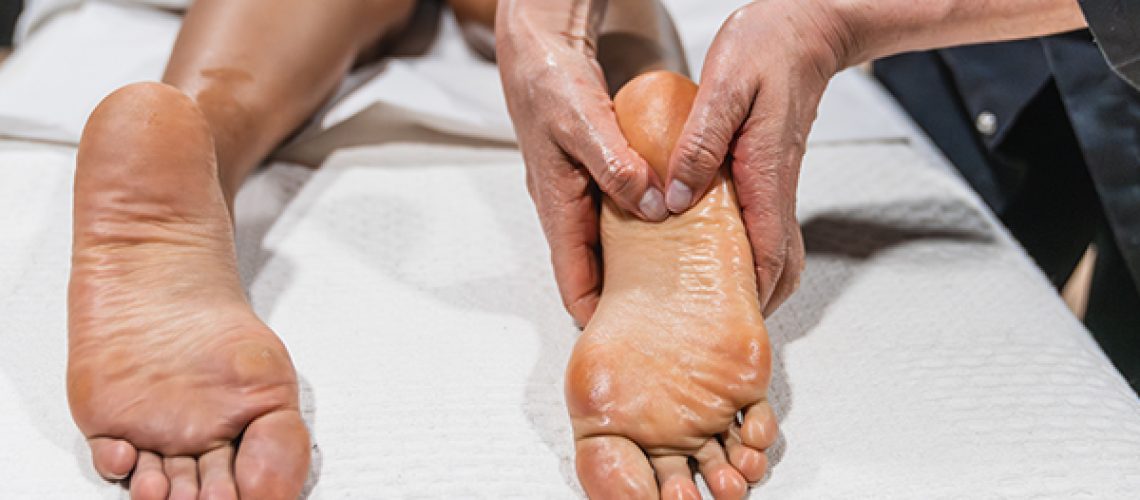
Osteopathy treatment involves manipulating the bones and tissues so that they align correctly and support the foot better. Plantar fasciitis and heel spur osteopathy is a gentle and effective way of relieving the pain and discomfort of these conditions.
Our osteopaths assess and correct structural imbalances in the feet, ankles, calves, knees and hips that contribute to plantar pain. You’ll receive gentle, hands-on work that restores mobility and alignment. Treatment is focused on muscles, tendons, calves, and the plantar fascia itself to release tight tissue, improve circulation, reduce tension and pain, and prepare the foot for advanced therapies.
For professional plantar fasciitis & heel spur treatment in Calgary, book your appointment online at osteohealthcalgary.janeapp.com or reach out to us at 403-814-0404 to find out how our caring professionals can help you.
Approved by Indira Ravaeva. Manual Osteopath. Member of National Manual Osteopathic Society and Osteopathy Australia.